Homelessness is one of the most persistent social issues in the United States. Every year, usually in the last 10 days of January, communities across the country carry out a point-in-time count: on a single night, they count the people staying in shelters and those sleeping outside, and the federal government adds the counts up into a national estimate. The 2024 count recorded 771,480 people, the largest number since national counts began in 2007 (de Sousa & Henry, 2024). The 2025 count, 745,652 people, was 3% lower but still the second largest on record (U.S. Department of Housing and Urban Development [HUD], 2026). In this paper, the main reasons for homelessness are discussed and the best evidence-based solutions are assessed. The main claim is that homelessness is largely an issue of housing affordability and public policy, and that any real progress on the issue must be made at that level. It is critical to design responses around the question of why people lose their homes, rather than assuming that the problem is their own fault.
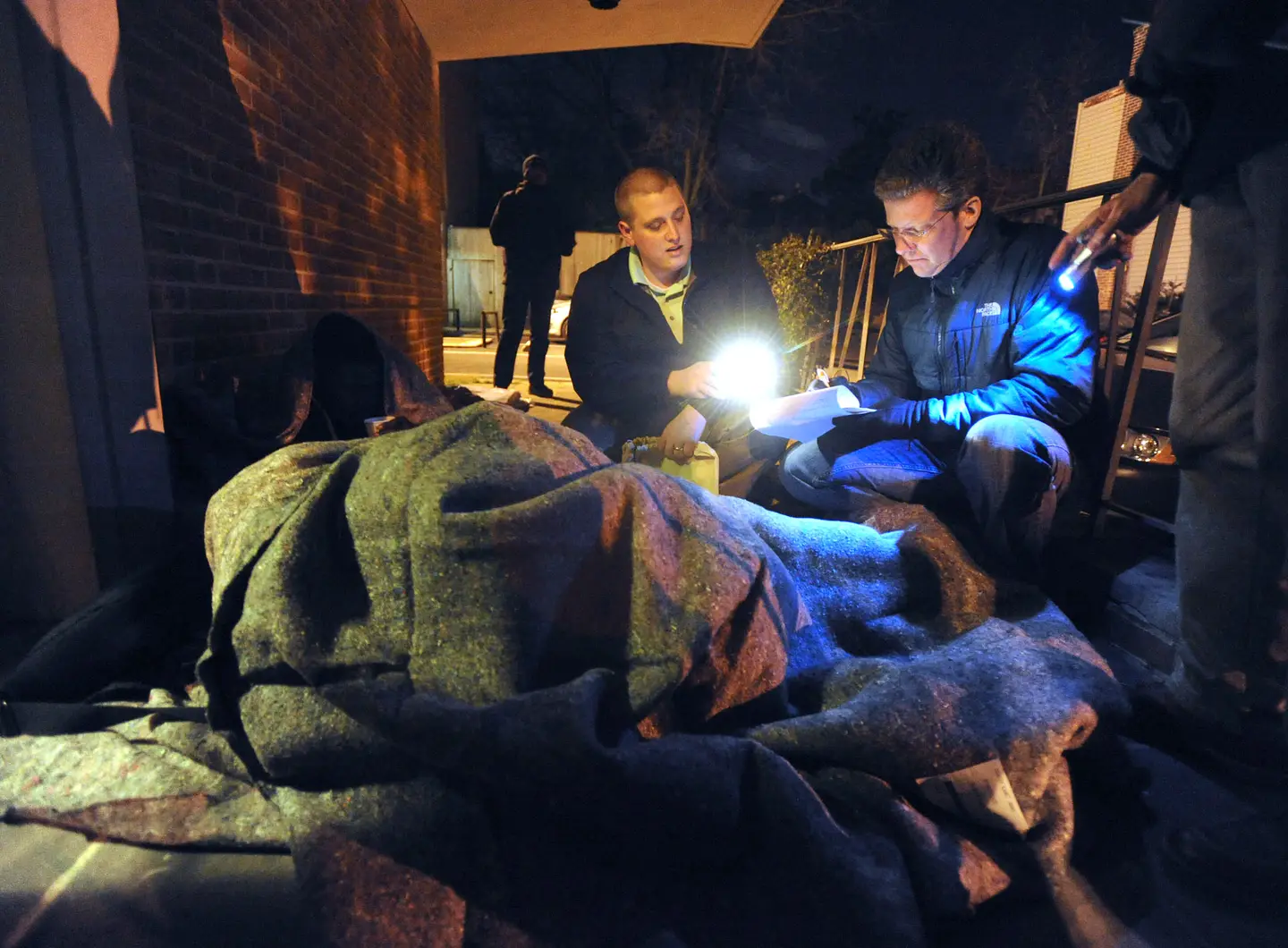
Causes of Homelessness
The biggest factor is the gap between housing costs and incomes. Since the Great Recession, housing prices and rents have grown much faster than incomes, especially in coastal cities that restrict how much housing can be built, and rising income inequality crowds low-income households out of the rental market (Byrne et al., 2021). When rent already takes most of a household’s income, a single shock, such as a car repair, a medical bill, or cut working hours, can leave it unable to pay and lead to eviction. Across the country, the places with the highest rents and the lowest rental vacancy rates have the highest rates of homelessness, while poverty, mental illness, and drug use do not explain the differences between regions (Colburn & Aldern, 2022).
This is exacerbated by poverty and economic instability. Many working people do not earn enough to meet their families’ needs, and many families have no savings to cushion a shock. When people cannot pay rent, they are evicted, and eviction can lead to homelessness. An eviction also leaves a record that makes it harder to rent another home. For racial minorities, these risks are greater, because racism in the housing market has long limited their access to loans and the value of their homes, and with them their wealth. Redlining, the grading of neighborhoods by mortgage risk on federal maps in the 1930s, is the best-known example, but Markley and Holloway (2024) find that since about 1970 a neighborhood’s Black population share has predicted its home values better than its redlining grade, which points to ongoing racism rather than the old maps alone. Homelessness is not limited to any one group: in January 2025, about two in three people counted were in households without children, nearly one in three was in a family with children, and about one in twenty was a young person under 25 on their own (HUD, 2026).
Everyone counted: 745,652
people homeless on one night in January 2025
- What it measures
- People staying in emergency shelters or transitional housing, and people sleeping in places not meant for living, such as streets, cars and encampments. It is 3% fewer than the record 771,480 counted in 2024.
- Period
- One night in January 2025
- Source
- U.S. Department of Housing and Urban Development, The 2025 Annual Homelessness Assessment Report (AHAR) to Congress, Part 1 (May 2026), pp. v and 1.
A count of one night, not of a year: it leaves out people staying with family or friends, and people who were homeless at another time of the year.
People in households without children: 515,286
69% of everyone counted
- What it measures
- Single adults, adult couples and young people on their own: everyone not in a household with a child under 18. HUD calls them “individuals.”
- Period
- One night in January 2025
- Source
- U.S. Department of Housing and Urban Development, The 2025 Annual Homelessness Assessment Report (AHAR) to Congress, Part 1 (May 2026), pp. vi and 19.
People in families with children: 230,366
31% of everyone counted
- What it measures
- Parents and the children under 18 they are homeless with. Their number fell by 11% from 2024, when it had risen by 39% in a single year.
- Period
- One night in January 2025
- Source
- U.S. Department of Housing and Urban Development, The 2025 Annual Homelessness Assessment Report (AHAR) to Congress, Part 1 (May 2026), pp. vi and 29.
People sleeping outside: 266,320
36% of everyone counted
- What it measures
- People whose place to sleep that night was not meant for living, such as a street, a car or an encampment. HUD calls them “unsheltered.”
- Period
- One night in January 2025
- Source
- U.S. Department of Housing and Urban Development, The 2025 Annual Homelessness Assessment Report (AHAR) to Congress, Part 1 (May 2026), p. 4.
These people are also counted in the two groups above, so this ring overlaps them.
Young people on their own: 35,159
5% of everyone counted
- What it measures
- People under 25 who are homeless without a parent or guardian and without children of their own. HUD calls them “unaccompanied youth.”
- Period
- One night in January 2025
- Source
- U.S. Department of Housing and Urban Development, The 2025 Annual Homelessness Assessment Report (AHAR) to Congress, Part 1 (May 2026), pp. vi and 40.
Young people who stay on a friend’s couch are not counted, and this group is part of the people in households without children.
The point-in-time count is HUD’s national estimate from counts that local communities carry out on one night, usually in the last 10 days of January.
Chart by Writers Per Hour from HUD’s The 2025 Annual Homelessness Assessment Report (AHAR) to Congress, Part 1 (May 2026), which the edited paper cites. Shares are of everyone counted, rounded.
| Group | People | Period |
|---|---|---|
| Everyone counted people homeless on one night in January 2025 | 745,652 | One night in January 2025 |
| People in households without children 69% of everyone counted | 515,286 | One night in January 2025 |
| People in families with children 31% of everyone counted | 230,366 | One night in January 2025 |
| People sleeping outside 36% of everyone counted | 266,320 | One night in January 2025 |
| Young people on their own 5% of everyone counted | 35,159 | One night in January 2025 |
Health problems and trauma also contribute, and homelessness may in turn raise the risk of mental health disorders (Barry et al., 2024). Pooling 85 studies, Barry et al. (2024) found that 67% of people experiencing homelessness had a current mental health disorder and 44% a substance use disorder. Serious mental illness, a substance use disorder, or a chronic disease raises a person’s risk, and homelessness makes each of these conditions worse. But these conditions are present in every community, and they do not explain why rates of homelessness differ so much from one community to another (Colburn & Aldern, 2022). They determine who is most vulnerable when housing is scarce; they do not create the shortage. Other entry points include domestic violence, aging out of foster care, and release from incarceration without housing support.
Lastly, gaps in public systems let people slip through. When psychiatric hospitals closed, community services were never built up enough to take their place, and some of the people who would once have been in hospital are now homeless (Lamb & Bachrach, 2001). Only about one in four households eligible for federal rental assistance receives it, and families who get a housing voucher have waited close to two and a half years for it on average (Acosta & Gartland, 2021). Veterans, young people, and people leaving hospitals and jails often return to their communities with nowhere to live.
Solutions to Homelessness
The first solution is to build and preserve low-income housing. The long-term answer is supply: zoning that allows more multifamily development, faster permitting, and incentives such as the federal Low-Income Housing Tax Credit. Tax credits are not enough on their own, however: Wijburg (2024) shows that tax-incentivized housing production does not necessarily deliver efficient or equitable housing, so public support should come with lasting affordability requirements. More rental assistance, such as Housing Choice Vouchers, would help the poorest families stay in their homes. Because only a small share of eligible households now receives such help, expanding it would stop homelessness before it starts.
Second, Housing First is a strategy that provides permanent housing without first requiring people to get sober or take part in treatment. In a review of research on veterans, Coventry et al. (2025) found that Housing First and the federal HUD-VASH program, which gives veterans rental vouchers and supportive services, have helped veterans with complex needs by making stable housing the foundation for recovery. The number of veterans counted as homeless in the United States fell by 55% between 2009 and 2024, a decline the federal government attributes to targeted and sustained funding (de Sousa & Henry, 2024). As critics point out, it does not always improve other outcomes, such as substance use. Housing makes treatment easier to reach but does not replace it, so Housing First must be paired with voluntary wraparound services, such as mental health care, addiction treatment, and case management.
Everyone counted
771,480 in 2024, the most since counts began in 2007; 745,652 in 2025.
Veterans
73,367 in 2009, when veterans were first counted; 32,495 in 2025, 56% fewer.
2021 has no bar: because of the COVID-19 pandemic, many communities did not count people sleeping outside that year, so HUD gives no national total for it. HUD attributes the fall in veteran homelessness to targeted and sustained funding.
Chart by Writers Per Hour from HUD’s 2007–2025 Point-in-Time Estimates by State (national totals) and the 2024 and 2025 Annual Homelessness Assessment Reports to Congress, Part 1.
Show the count for every year
| Year | Everyone counted | Veterans |
|---|---|---|
| 2007 | 647,258 | — |
| 2008 | 639,784 | — |
| 2009 | 630,227 | 73,367 |
| 2010 | 637,077 | 74,087 |
| 2011 | 623,788 | 65,455 |
| 2012 | 621,553 | 60,579 |
| 2013 | 590,364 | 55,619 |
| 2014 | 576,450 | 49,689 |
| 2015 | 564,708 | 47,725 |
| 2016 | 549,928 | 39,471 |
| 2017 | 550,996 | 40,020 |
| 2018 | 552,830 | 37,878 |
| 2019 | 567,715 | 37,085 |
| 2020 | 580,466 | 37,252 |
| 2021 | — | — |
| 2022 | 582,462 | 33,129 |
| 2023 | 653,104 | 35,574 |
| 2024 | 771,480 | 32,882 |
| 2025 | 745,652 | 32,495 |
Third, prevention is better than crisis response: it is more humane and more cost-effective. For instance, emergency rental assistance, legal aid in eviction proceedings, and diversion programs can keep families in their homes at a lower cost than emergency shelter or emergency care. Better discharge planning in hospitals, jails, prisons, and foster care would close the gaps through which many people slip into homelessness. Healthcare professionals can help by screening or asking patients about housing during routine visits and linking them to community resources.
Fourth, income and employment support helps resolve the economic causes of homelessness. A higher minimum wage helps low-wage workers afford rent. Job training combined with housing assistance and a larger Earned Income Tax Credit can also help low-income earners pay rent. When someone cannot work because of a disability, the sooner they receive disability benefits, the sooner they can be housed and the less likely they are to end up on the streets. Stable income does not replace affordable housing but complements it, making housing possible for people who could not otherwise afford it.
Fifth, policies that criminalize homelessness should change. Fines, arrests, and encampment sweeps can push residents out of the public eye. However, they also generate records and debts that can make it more difficult to get a job or a place to live. The public money spent on sweeps and arrests would be used more effectively on outreach and permanent housing.
Finally, coordination is essential to success. Funding, policy, and implementation at the federal, state, and local levels must be aligned, and communities need common measures of effectiveness. Cities that have reduced homelessness have typically combined these elements rather than relying on a single program. Accountability is important too, because funds need to be allocated based on measurable outcomes, such as fewer people sleeping unsheltered and fewer people returning to homelessness.
Conclusion
Homelessness in the United States of America is not inevitable. It is the consequence of identifiable policy decisions about housing, wages, health, and public support. Individual vulnerabilities matter, but the housing market gives people too little protection. The solutions presented here show that it can be greatly reduced through affordable housing and rental assistance, Housing First with supportive services, prevention, income support, an end to the criminalization of homelessness, and coordinated action at every level of government. The country has the means and the expertise to keep homelessness infrequent and brief. Each person in the yearly counts is a neighbor whose homelessness could have been prevented. The long-term costs of not investing are far greater for all concerned than the costs of ongoing investment. Policymakers must therefore be willing to make the necessary changes and enact policies that reduce homelessness.